Living the Contradiction
- Date: May 28, 2026
- Location: CITIC Bookstore at Genesis Beijing
Event Summary
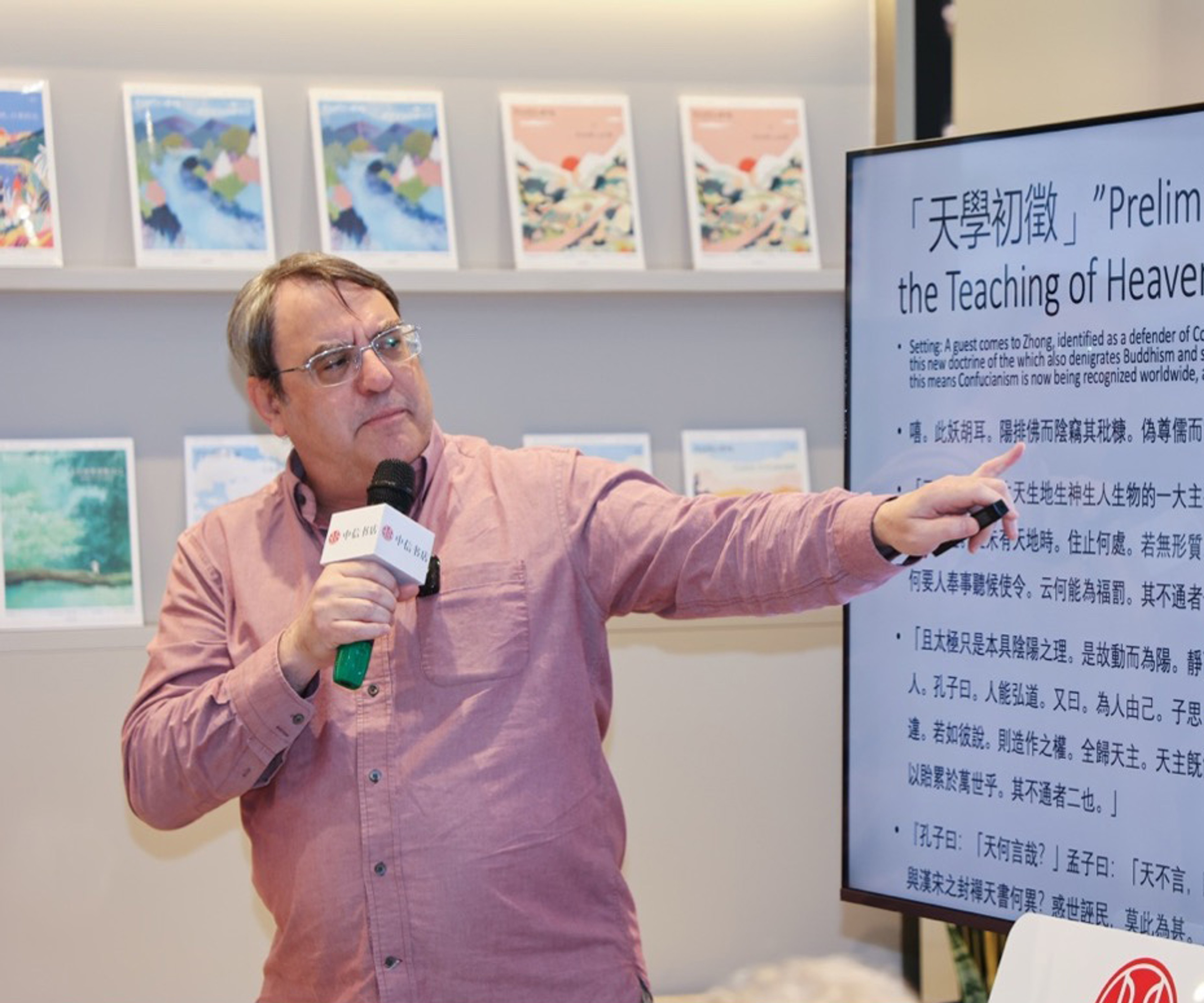
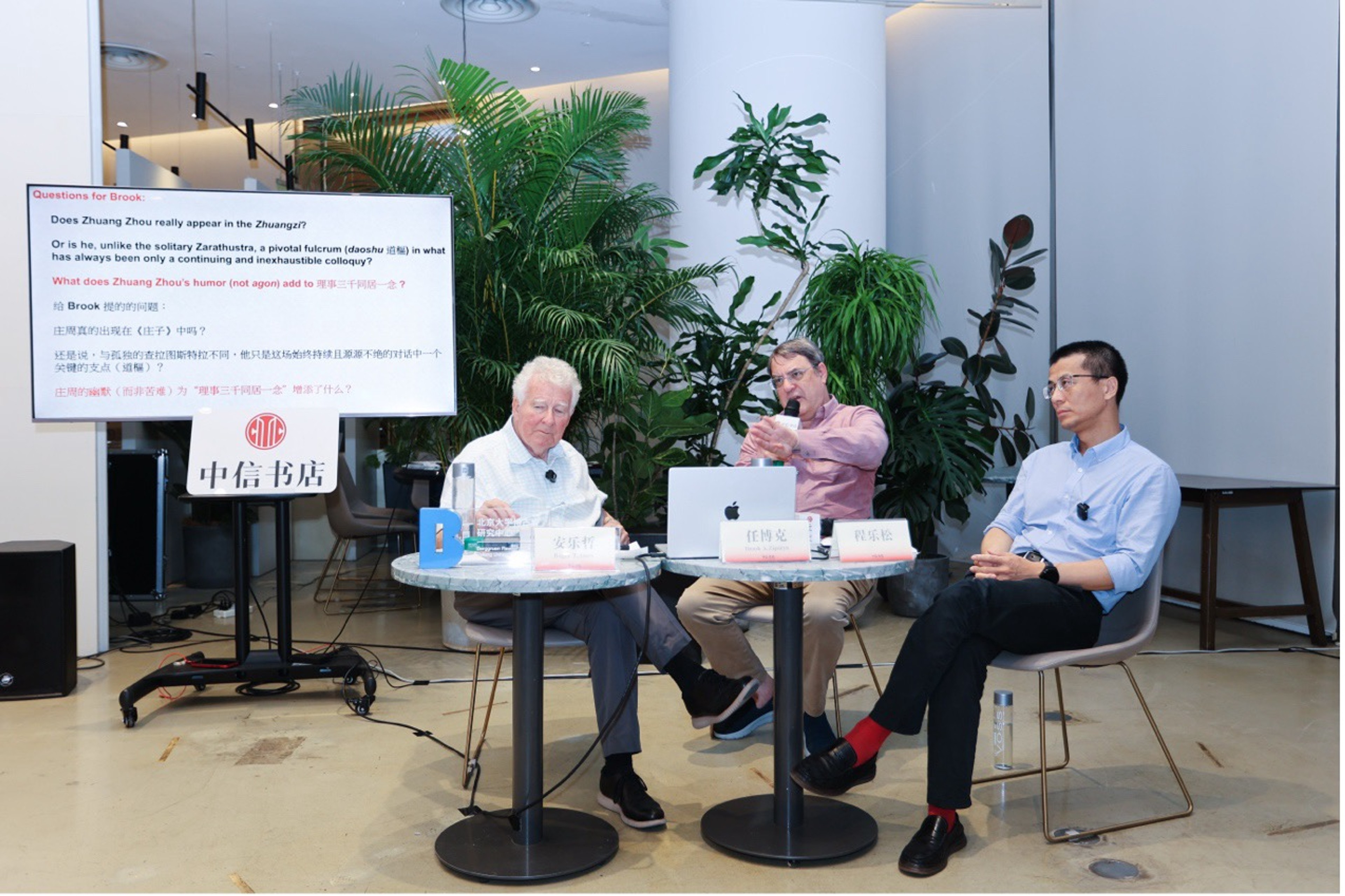
On May 28, 2026, Brook Ziporyn, Professor of Chinese Religion, Philosophy, and Comparative Thought at the Divinity School at the University of Chicago delivered the Berggruen Global Thinkers Lecture at CITIC Bookstore at Genesis Beijing. The talk was titled “Living the Contradiction,” providing a novel interpretation of the Pixieji (闢邪集), which depicts an encounter between the Buddhists, Confucians, and Jesuit missionaries during the late Ming Dynasty (1600s). Roger T. Ames, Chair Professor of Humanities at Peking University, and CHENG Lesong, Chair of the Department of Philosophy and Religious Studies at Peking University provided commentaries.
A Confucian Critique of Catholic Doctrine
Superficially, the text reads as a Confucian refutation of Catholic teachings. Ziporyn opens by introducing its core cast of characters. The ostensible primary author, Zhong Zhenzhi (鐘振之), identifies as a committed Confucian and Zhouyi (周易) scholar, fiercely dedicated to debunking Buddhist and Daoist thought. Additional figures include two historic Jesuit missionaries, Matteo Ricci and Giulio Aleni; Shi Dalang (釋大郎), the Buddhist monk who penned the preface; Chan Master Jiming (際明禪師), a Buddhist interlocutor featured in the appendixes; and Cheng Zhiyong, called the “Dreamt Scholar” (夢士程智用), who edited, printed, distributed the collection, and wrote its postscript.
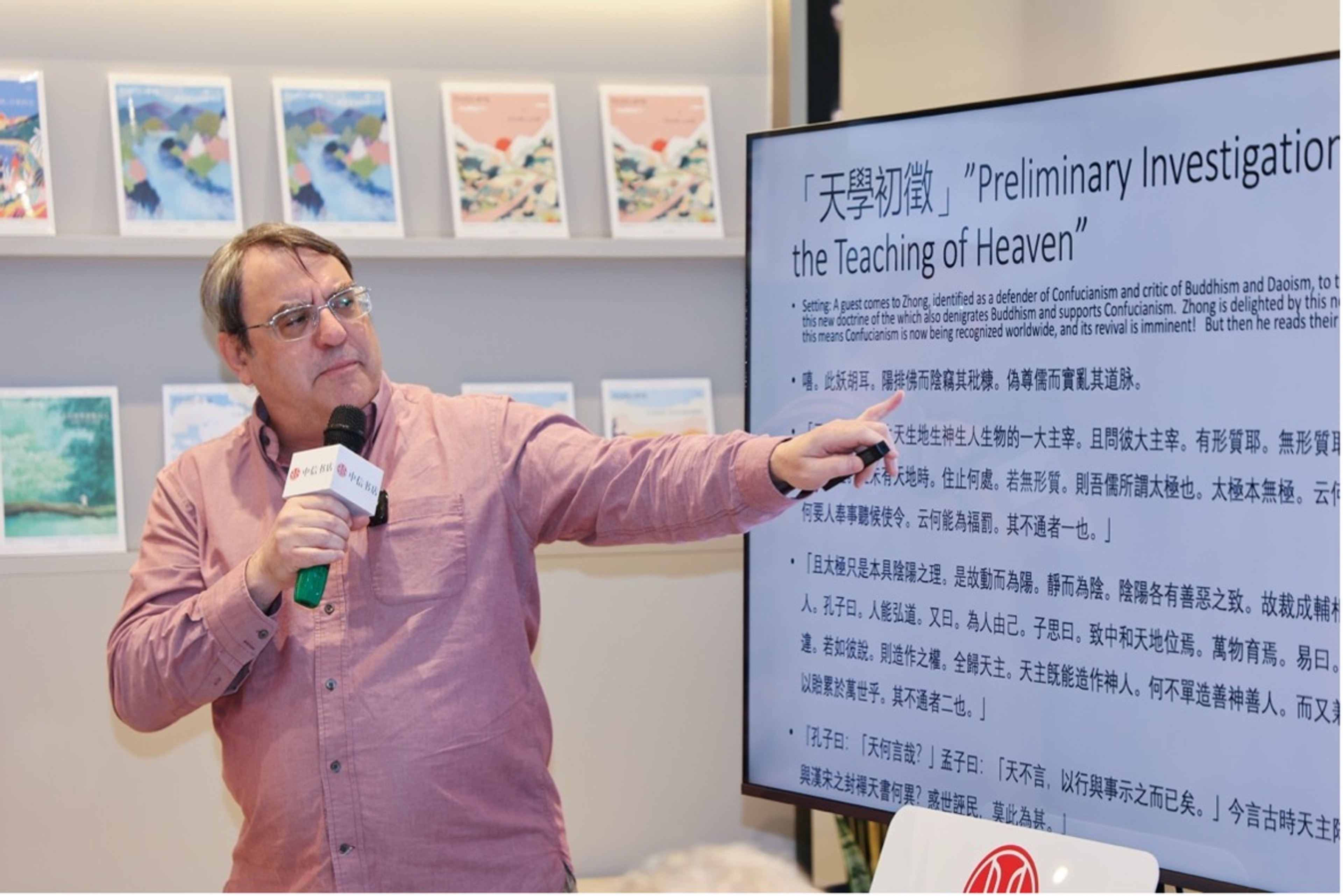
In the first section, “Tianxue Chuzhi” (天學初徵), Zhong initially hopes the Jesuits might serve as allies for Confucianism against Buddhism and Daoism. After studying missionary texts, however, he dismisses their teachings as simply bastardizations of Buddhism and launches into a searing critique of Christianity. He frames the concept of an omniscient, creator God who intentionally commands, judges, rewards, and punishes humanity as logically incoherent. Zhong poses a dilemma: if God has no physical form, then God reduces to the Neo-Confucian principle of Taiji (太极), an originative principle present throughout reality. For Zhong, only finite, physically bounded entities can possess desires, intentions, affections, or the will to issue rewards and punishments. The universe naturally contains both good and evil, requiring human cultivation to mold what is good. Conversely, if God does possess a distinct physical form, this particularized deity would itself require a prior creator. This critique exposes a foundational conflict between Christian and Neo-Confucian metaphysical assumptions: in Neo-Confucian metaphysics, intentionality, preference, and purposeful action rely on determinate physical form. Zhong further raises the classic theodicy problem: if God holds total creative power, why would God fashion a world containing both good and evil? He likewise deems it absurd that an omnipotent, omniscient divine being would descend to deliver something as comparatively minor as the Ten Commandments.
In the second section, “Tianxue Zaizhi” (天學再徵), Zhong develops a more sophisticated critique extending beyond Catholic doctrine to broader Western metaphysical assumptions. He outlines three distinct definitions of tian (天) within Confucian tradition: the physical sky above; the ruler on high shangdi (上帝), who rewards virtue and punishes wrongdoing; and the uncreated, immanent inherent nature of all beings, human and otherwise. Zhong argues the Jesuits only grasp the second meaning. Unlike the Christian creator-God, the Confucian shangdi governs the world but does not generate it from nothing. Christianity draws a rigid split between immanent and transcendent realms: the Christian God functions like a separate craftsman, standing outside the creation He fashions. To Zhong, this separation of creator and creation creates an unresolvable metaphysical contradiction. Ziporyn highlights one particularly sharp line of critique: a purely benevolent, conscious omnipotent ruler would render the Confucian sage meaningless. If a divine sovereign preordained all transformation as inherently good, humanity would no longer have the vital role of participating in the continual transformation and nourishment of all things as the very practice needed to cultivate true goodness.
Ouyi Zhixu’s Self-Dialogue Reveals Tiantai Buddhist Philosophy
After unpacking Zhong’s anti-Catholic arguments, Ziporyn shifts analysis to the text’s framing apparatus: its preface and appendix materials. The preface is narrated by Buddhist monk Shi Dalang, who recounts Zhong Zhenzhi bringing his critical writings to Chan Master Jiming. The Chan master poses a provocative question: how can Zhong know Ricci and Aleni are not bodhisattvas themselves with the duty to illuminate the Buddha Dharma? Shi Dalang evokes a core Tiantai Buddhist premise: no dharma carries inherent correctness or falseness. Instead correctness or falseness hinges on how a teaching is understood and used. Shi Dalang narrates the story of how Shakyamuni Buddha deployed teachings of impermanence, suffering, non-self, and impurity as provisional tools to teach the deeper ultimate truths of permanence, bliss, true self, and purity.
According to Shi Dalang’s account, Chan Master Jiming advises Buddhists to avoid direct debate with the Jesuits. Instead, Zhong’s Confucian advocacy for secular governance should lead the counterargument and this conflict would indirectly elevate Buddhist teachings. The Dreamt Scholar, who read Zhong’s essays and the appended letters exchanged between Zhong and Jiming, added marginal annotations and oversaw printing. Shi Dalang frames the missionaries, Zhong Zhenzhi, and Master Jiming all as “inconceivable” (bukesiyi不可思议), which in Tiantai terminology, this phrase indicates all of the characters are hidden bodhisattvas. The appendix reveals Zhong and Jiming shared a birthdate, studied under the same teacher, and once held identical youthful Confucian aspirations, only for Jiming to later convert to Chan Buddhism, ostensibly establishing them as old friends. Their correspondence reinforces Jiming’s refusal to enter the argument as a Buddhist, and his belief that this conflict will nevertheless bring attention to the true teaching of Buddhism.
Ziporyn then reveals his pivotal, surprising revelation: the late-Ming Tiantai monk Ouyi Zhixu (藕益智旭) is the uncredited true author of Pixieji, and every named character functions as facets of his own identity. Zhong was Ouyi’s original family surname; Jiming his given name from youth; Dalang a monastic alias he used as a young lay Buddhist. The detail that Zhong and Jiming share a birthdate, teacher, and early ambitions is literal: they are the same man. What reads as dialogue between separate thinkers is a staged internal conversation across Ouyi’s fractured selves: Zhong Zhenzhi embodies his Confucian persona, Jiming his Chan Buddhist identity, Shi Dalang his Tiantai orientation, and the Dreamt Scholar the quiet, laboring editorial self behind publication.
This layered framing gains full context from Ouyi’s complicated relationship to Tiantai Buddhism. Though retrospectively honored as Tiantai’s thirty-first patriarch, Ouyi distanced himself institutionally from the school during his lifetime, framing his Tiantai leanings as circumstantial rather than a fixed, chosen identity. Tiantai’s foundational tenets “the ten realms mutually subsume/interprevade” (shijie huju 十界互具) and “three thousand dwelling in one moment of mentation” (yinian sanqian一念三千) underpin this internal dialogue. Every existential realm inherently contains all others: Buddhahood contains hell, hungry ghosts, animals, humans, gods, and all other lower states, and even the lowest states contain Buddhahood. No phenomenon or moment can be completely separate and contains the full complexity of every other phenomenon or moment. Therefore, the conflict between Ouyi’s identities and perspectives are necessarily included with the harmonious coexistence of them. They do not demand resolution. This text is typically read as a tactical move by the Buddhists to use Confucian arguments against Catholicism as Buddhism was the primary target of the Jesuit’s critique and therefore held a weaker argumentative position. Ziporyn, however, reinterprets the framing of the Pixiejias a performance Tiantai thought in action precisely through this divided presentation of himself.
Roger Ames: Paralleling Zhuangzi and Zarathustra
Roger Ames’ response engaged the Tiantai logic animating Pixieji, then draws a comparative framework between the Daoist text Zhaungzi and Nietzsche’s Zarathustra in Thus Spoke Zarathustra. Ames first restates Ziporyn’s core claim: Tiantai thought affirms the harmonious coexistence of contradictory inner perspectives within a single person. He then invites a parallel analysis of Zhuang Zhou and Zarathustra modeled on Ziporyn’s Tiantai reading of Ouyi in Pixieji.
Ames characterizes Zhuang Zhou as the facilitator of opposing viewpoints in dialogue and allegory. He resists categorization and coherence and is not constrained by conventional oppressive judgements. Zarathustra is the opposite, presenting as a single authoritative voice of Nietzsche’s philosophical teachings. Zarathustra is ridiculed and oppressed by the public until he is talking to an audience of one: himself.
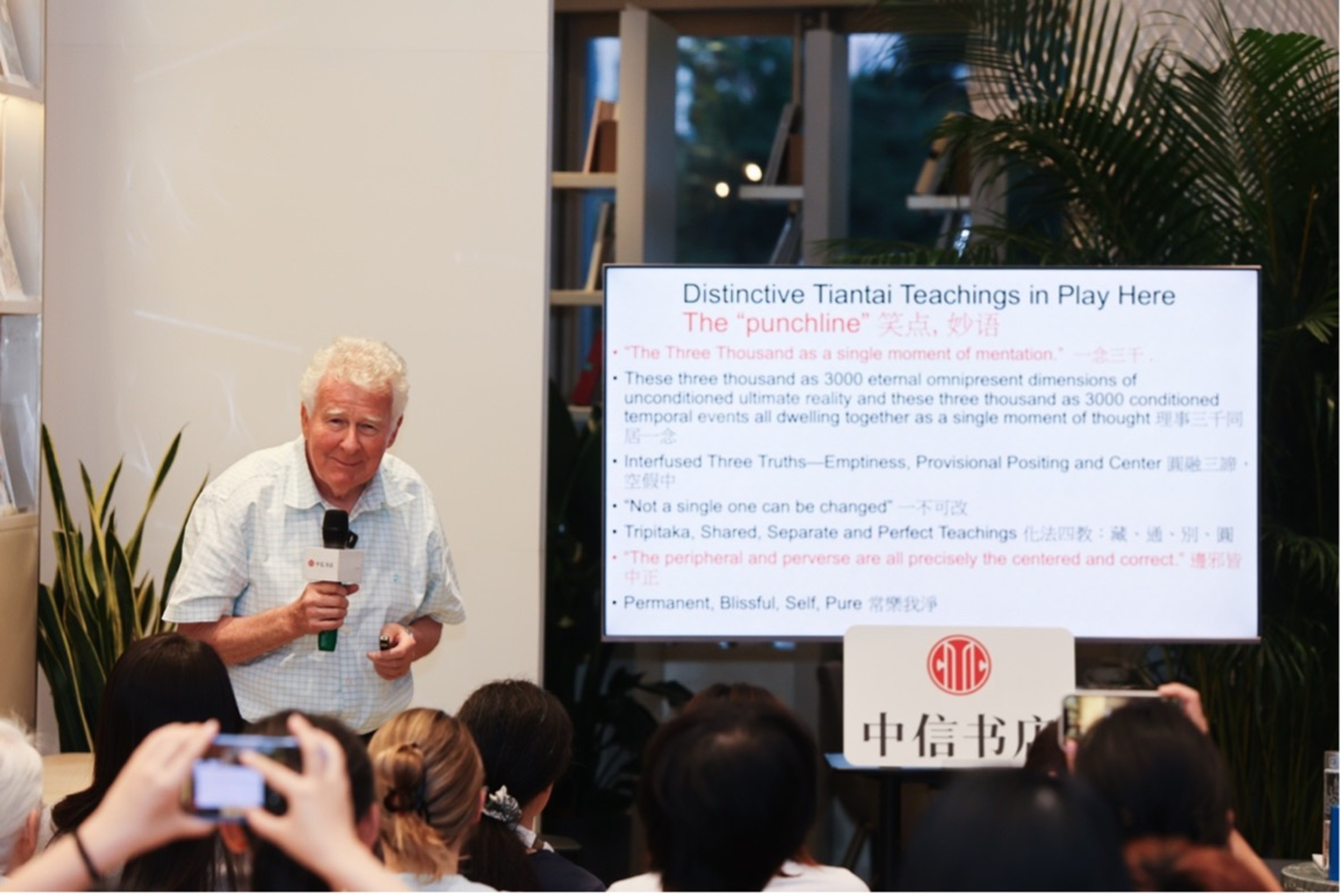
Ames advances a heterodox textual theory: he argues both inner and outer chapters of the Zhuangzi emerged collaboratively, pushing back against the conservative consensus that the inner chapters originate from the historical Zhuang Zhou alone. Citing Jerome Gottimer’s thesis that texts possess inherent integrity yet may also be interpreted in infinite ways, Ames frames the Zhuangzi as a cumulative commentary tradition, where each successive reading and annotation plays a part of the text’s continual creation. This raises parallel questions: does a unified, singular authorial perspective exist for Zhuang Zhou, analogous to Zarathustra’s singular prophetical voice? Or is Zhuang Zhou, like Ouyi in Pixieji, a composite symbolic figure? Ames further asks whether the Zhuangzi’s humor can be interpreted through the Tiantai Buddhist philosophy of “three thousand dwelling in one moment of mentation” (yinian sanqian一念三千).
Ziporyn concurs that Zhuang Zhou’s presence in the Zhuangzi mirrors Ouyi’s absence in Pixieji: both are figures behind a cast of characters. He notes a tonal distinction: Pixieji lacks the overt comedy of the Zhuangzi yet carries its own layered humor rooted in structural irony. Readers only discover belatedly that every speaker originates from one single writer. Ziporyn explains humor is actually an ideal entry point for grasping Tiantai Buddhism, arguing the structure of a joke structure mirrors the structure of reality itself. Central to this is the Tiantai belief kaiquan xianshi (开权显实), which means opening up the conventional truth reveals that the ultimate truth is actually the conventional truth. Ziporyn argues that one must understand the relationship between convention (quan权) and reality (shi实) the same way one understands the set up and punchline of a joke: a pun is funny because the punchline makes both the unfunny conventional meaning the secondary meaning intelligible at the same time.
Cheng Lesong: Critique as Mode of Acceptance
In cultural encounters, differences frequently become hostile conflicts. Cheng Lesong observed that although they often use a shared vocabulary, Confucian, Daoist, Buddhist, and Christian thought each operate with distinct semantic frameworks, such that "world,” (shijie世界), “self” (ziwo自我) or "truth" (zhenli真理) carry unaligned meanings. The problem, therefore, is not simply a matter of who is right and who is wrong, but rather: can differing ideas come into contact and clash without that clash devolving into emotional hostility?
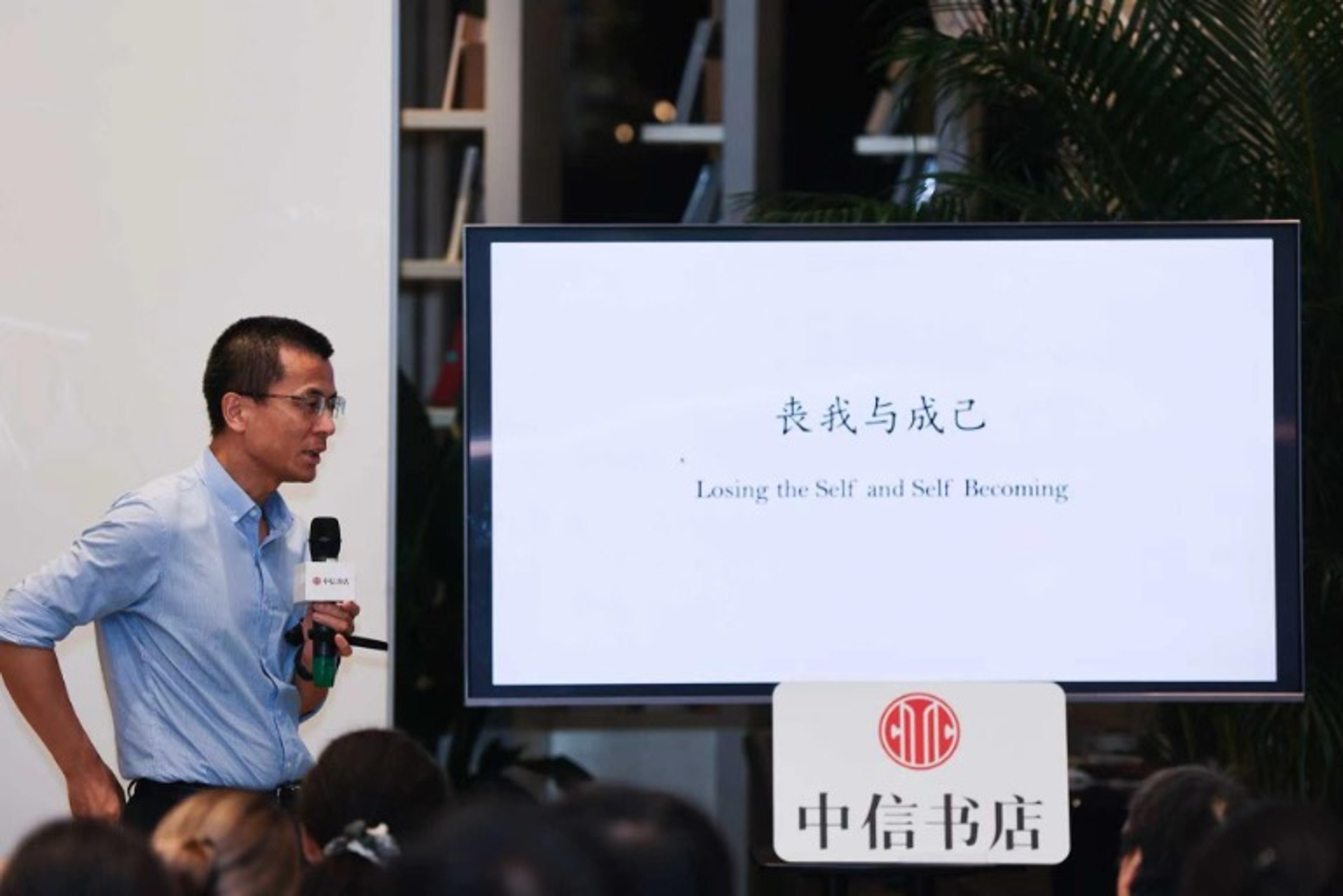
To answer this question, Cheng frames the self as relationally constructed rather than innate or fixed. Drawing on Foucault’s discussion of the emergence of the modern subject, Cheng highlights multiple forms of subjectivity, contrasting the modern individual with classical Chinese selfhood, cultivated through moral practice, relationships, and spiritual development. He pairs two ideals: Zhuangzi’s “losing the self” (sangwo 丧我), the goal of letting go of a single standpoint defined against others and the Confucian “becoming oneself” (chengji 成己), the lifelong work of self-cultivation. Though seemingly contradictory, they form a single process. Through abandoning a rigid position though not easing one self, genuine selfhood can be achieved through the process of keeping the self open and responsive.
This framework reimagines the nature of intellectual conflict. Cheng differentiates between "fallacious arguments" (miulun谬论) and Zhuangzi's "extravagant and paradoxical words" (miuyou zhi yan谬悠之言). “Fallacious argument” presupposes an erroneous opponent while “extravagant and paradoxical words” do not rush to determine right and wrong. Instead, they function as invitations, repeatedly interrupting familiar patterns of judgment and encouraging reflection and openness. Intellectual conflict, in this sense, can become an opportunity for mutual understanding.
As such, critique becomes a mode of acceptance. Criticism does not necessarily imply rejection, but rather first acknowledges the presence of the other and recognizes that difference deserves a response. This requires continually readjusting one’s understanding through dialogue and experience. Like balancing “losing the self” and “becoming oneself,” this process does not need to provide a single unified answer, but to cultivate a dynamic balance that neither rejects differences nor passively accommodates them.
Q&A: Living the Contradictions in Contemporary Practice
The audience Q&A bought questions about how these concepts could be brought into contemporary practice. One member asked how we should handle conflict. Cheng replied simply: "admit defeat." He emphasized that "admitting defeat" does not mean admitting error but relinquishing the need to prove oneself right. Ziporyn cited classical Chinese philosophy, including Xunzi and the "Tianxia" chapter of the Zhuangzi, adding that it requires moving beyond the evaluative structure of right and wrong itself and instead prioritizing a comprehensive solution capable of integrating multiple perspectives.
The speakers also discussed paradoxes of attachment in Buddhism. Ames raised an issue: when Buddhism uses terms such as "Truth," "Eternal," and "Ultimate," does it not risk violating its own teachings of emptiness and non-attachment by creating new linguistic attachments? Ziporyn emphasizes that such terms cannot be interested in the Western Platonic sense, but in Chinese Tiantai Buddhism where their meanings emerge relationally and mutually constrain one another. Understanding them therefore requires attention not to static definitions but to the dynamic processes through which they transform and generate meaning.
Finally, when asked if this integrative philosophy could be the answer to theories of civilizational conflict, Ziporyn acknowledged that it is not as prone to generate absolute dichotomies and thus more capable of fostering reconciliation and harmonization. Cheng, however, cautioned against turning "integration" itself into an ultimate goal. What truly matters is not fusion for its own sake, but the cultivation of an imaginative capacity for mutual recognition among civilizations while preserving their differences.
--
Written by Berggruen Interns: Chianna Cohen, TIAN Tianzeng
Guest Speaker
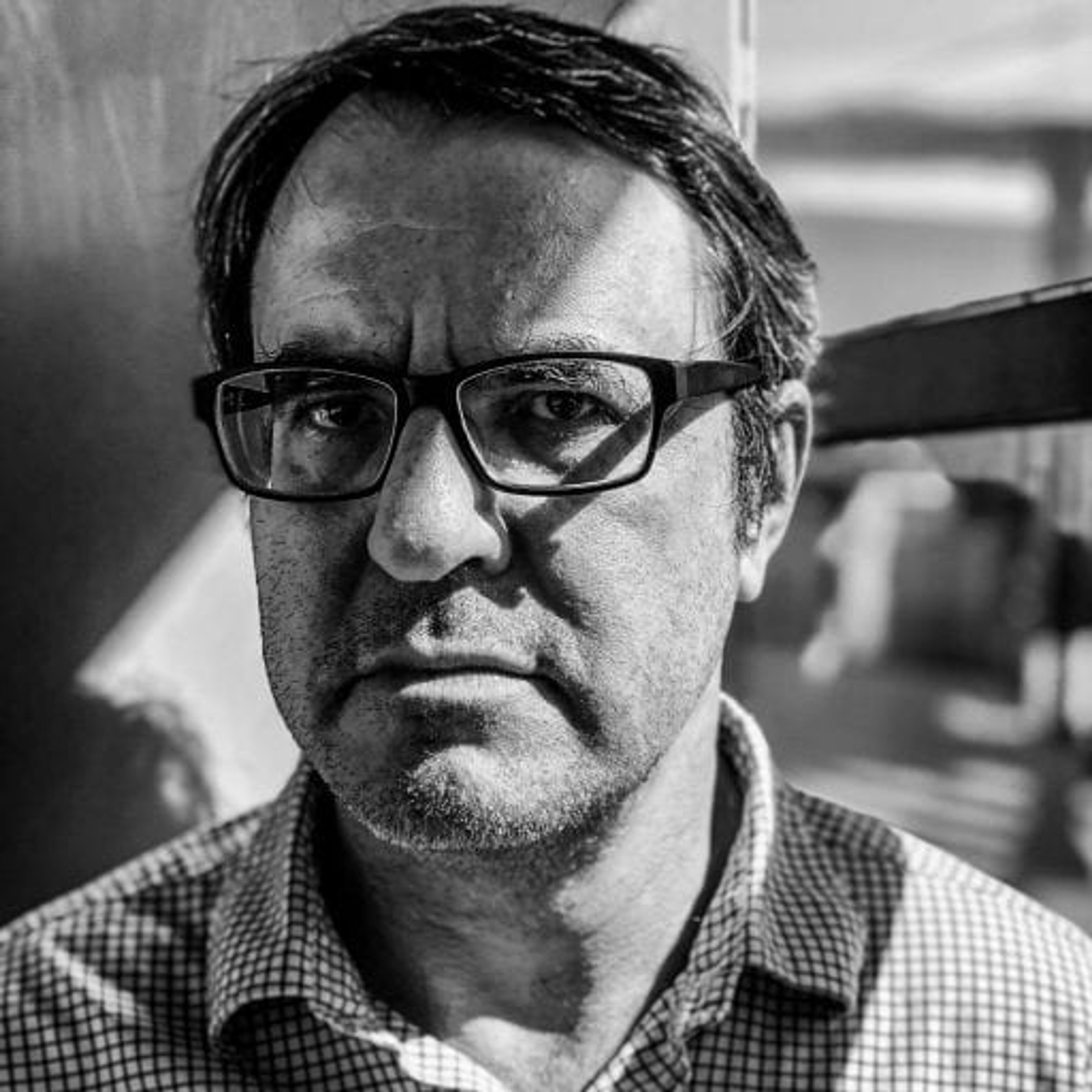
Brook A. Ziporyn
Mircea Eliade Professor of Chinese Religion, Philosophy, and Comparative Thought at the University of Chicago Divinity School
Professor Ziporyn is a scholar of ancient and medieval Chinese religion and philosophy. He is the author of Evil And/Or/As the Good: Omnicentric Holism, Intersubjectivity and Value Paradox in Tiantai Buddhist Thought (Brill, 2000), The Penumbra Unbound: The Neo-Taoist Philosophy of Guo Xiang (SUNY Press, 2003), Being and Ambiguity: Philosophical Experiments With Tiantai Buddhism (Open Court, 2004); Zhuangzi: The Essential Writings with Selections from Traditional Commentaries (Hackett, 2009); Ironies of Oneness and Difference: Coherence in Early Chinese Thought; Prolegomena to the Study of Li (SUNY Press, 2012); Beyond Oneness and Difference: Li and Coherence in Chinese Buddhist Thought and its Antecedents (SUNY Press, 2013); Emptiness and Omnipresence: An Essential Introduction to Tiantai Buddhism, (Indiana University Press, 2016); and Experiments in Mystical Atheism: Godless Epiphanies from Daoism to Spinoza and Beyond (The University of Chicago Press, 2024). Zhuangzi: The Complete Writings, translated and with introduction and notes by Brook Ziporyn was published by Hackett in 2020, and his translation of the Daodejing was published by Liveright Books and the Norton Library in 2023.
Moderator
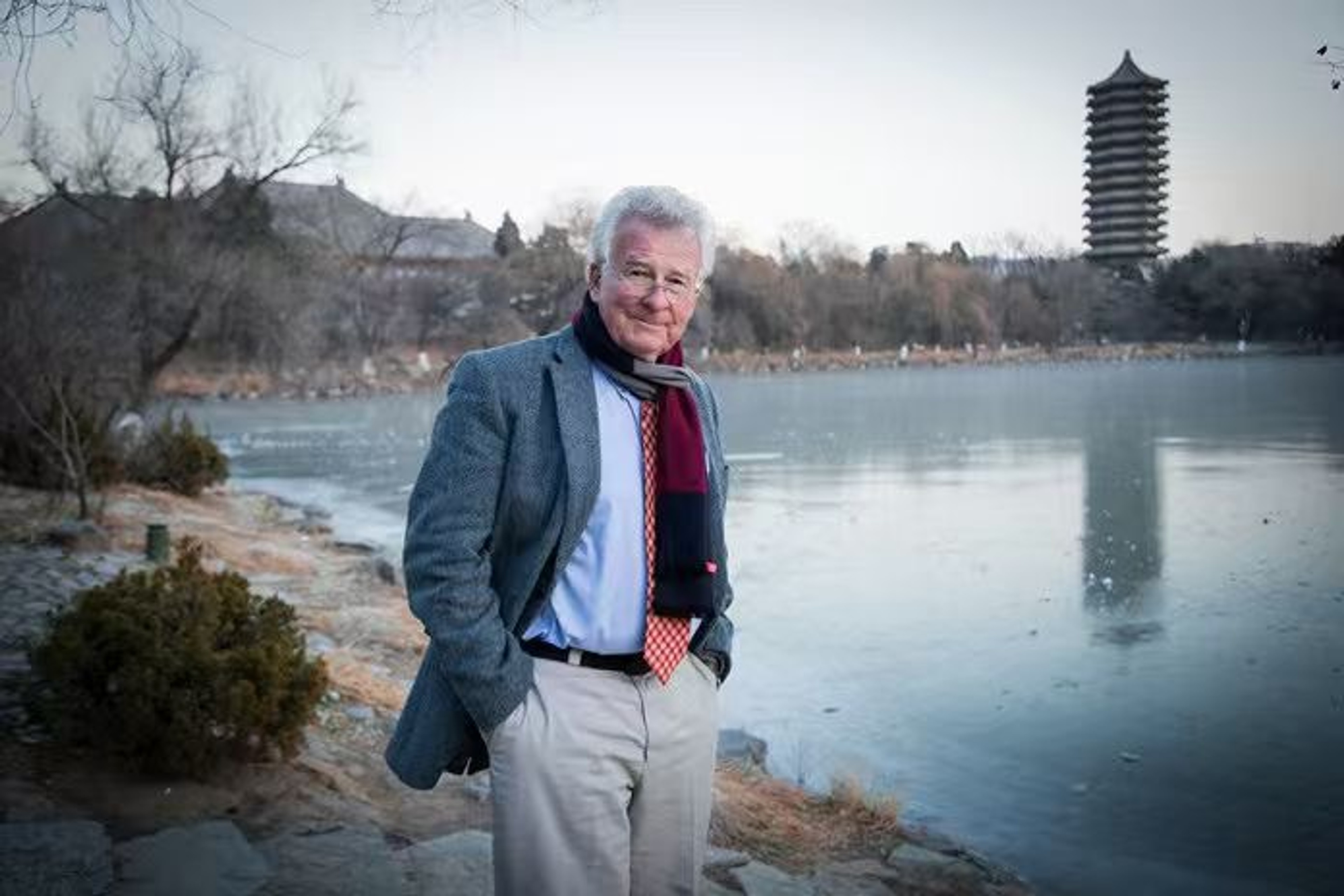
Roger T. Ames
Humanities Chair Professor, Peking University
Co-Chair, Academic Advisory Council, Berggruen Research Center, Peking University
Professor Ames is the former editor-in-chief of Philosophy East & West and founding editor of China Review International. He has authored several influential works on Chinese philosophy, including Thinking Through Confucius (1987) and Human Becomings: Theorizing Persons for Confucian Role Ethics (2020). His translations of Chinese classics include The Art of Warfare (1993), The Confucian Analects (1998), and The Daodejing (2003). His work has been widely translated into Chinese, including his recent Sourcebook in Classical Confucian Philosophy (2022).
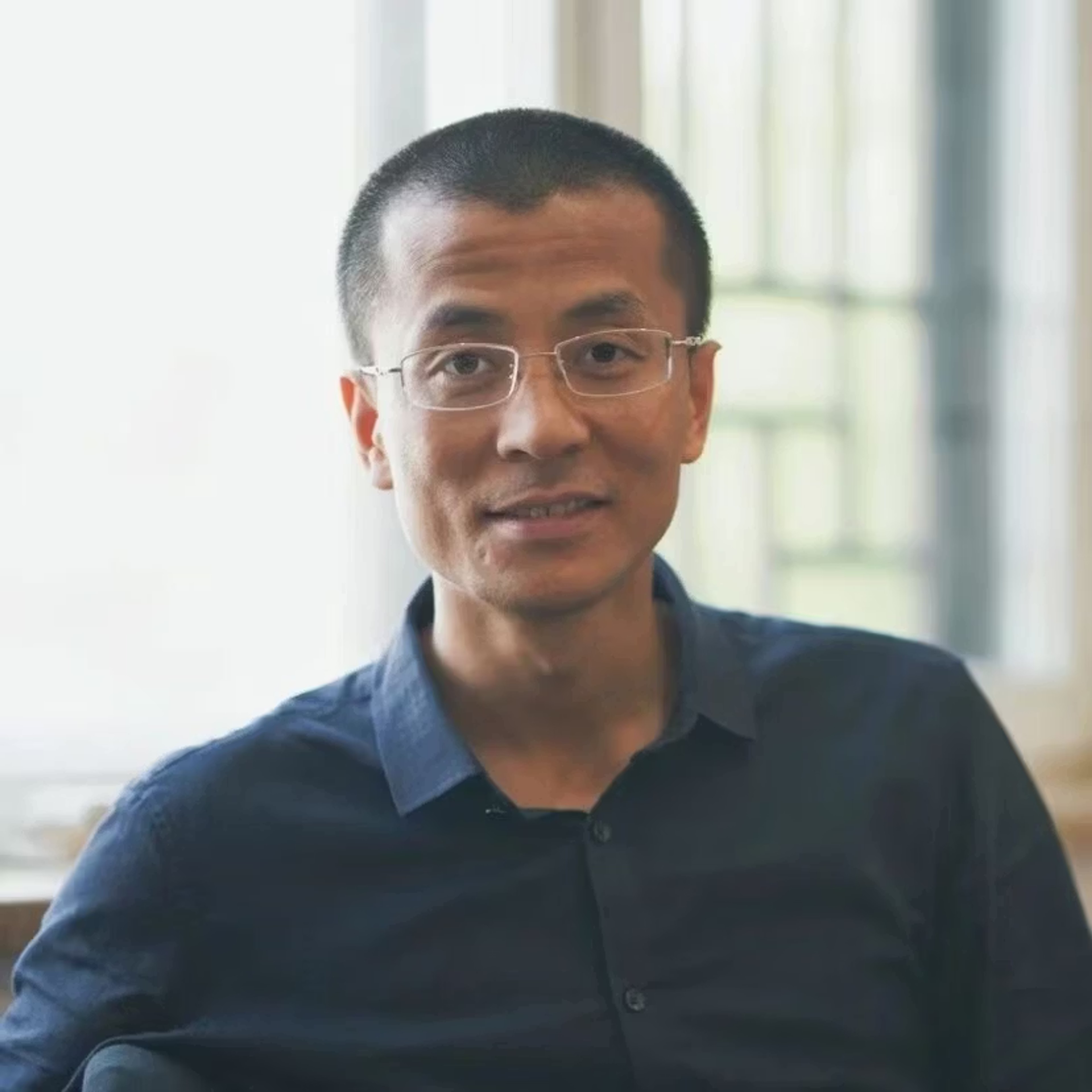
CHENG Lesong
Dean and Professor, Department of Philosophy and of Religious Studies, Peking University
Professor Cheng earned his PhD in Culture and Religion from the Chinese University of Hong Kong in 2006. His research focuses on early Daoist thought, the history of Daoist ideas, and intellectual history during the Han Dynasty. Adopting a perspective that views religion in terms of faith, he employs methods in textual and intellectual history to analyze Daoist classics within their ancient cultural contexts, thereby contributing to an academic understanding of Daoism in Chinese cultural history. Professor Cheng also teaches a range of courses on Daoism and religious studies, including Daoist history, Daoism and folk religion, and the principles of religious studies.
---
Image at top: Mount Tiantai by Wu Bin, 1605, Honolulu Museum of Art
About The Berggruen Institute
About The Berggruen Institute
About The Berggruen Institute
About The Berggruen Institute
About The Berggruen Institute
About The Berggruen Institute
About The Berggruen Institute
About The Berggruen Institute
About The Berggruen Institute
About The Berggruen Institute
Related
On the Equality of All Things with Carlo Rovelli
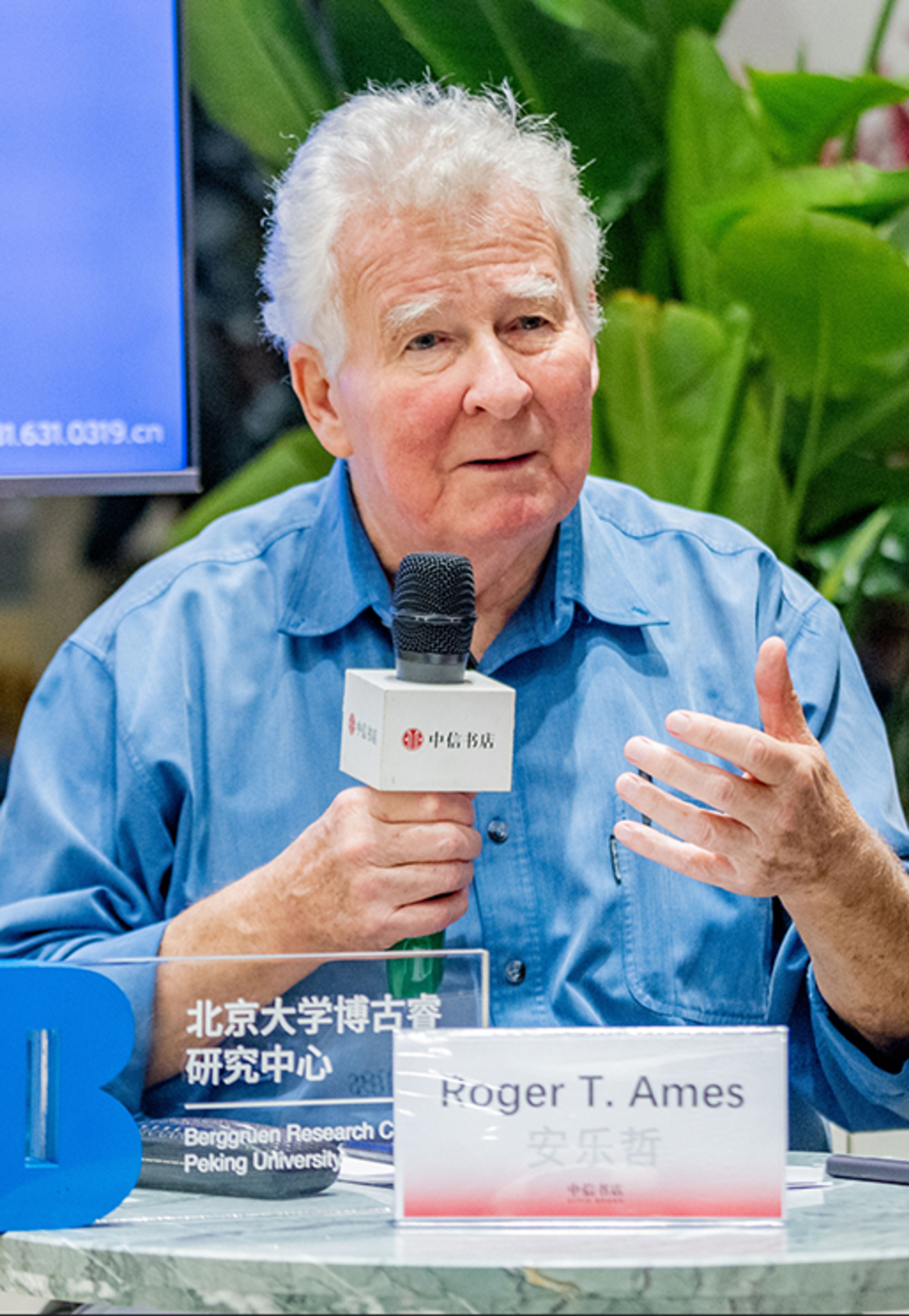
Translating Chinese Philosophy
In Conversation with Peter Singer | Utilitarianism: Avoiding Common Misunderstandings and Responding to Objections

In Conversation with Peter Singer: Ethics and Animals
In Conversation with Wang Gungwu: Understanding the Sinic Civilization in World History