Anil Seth
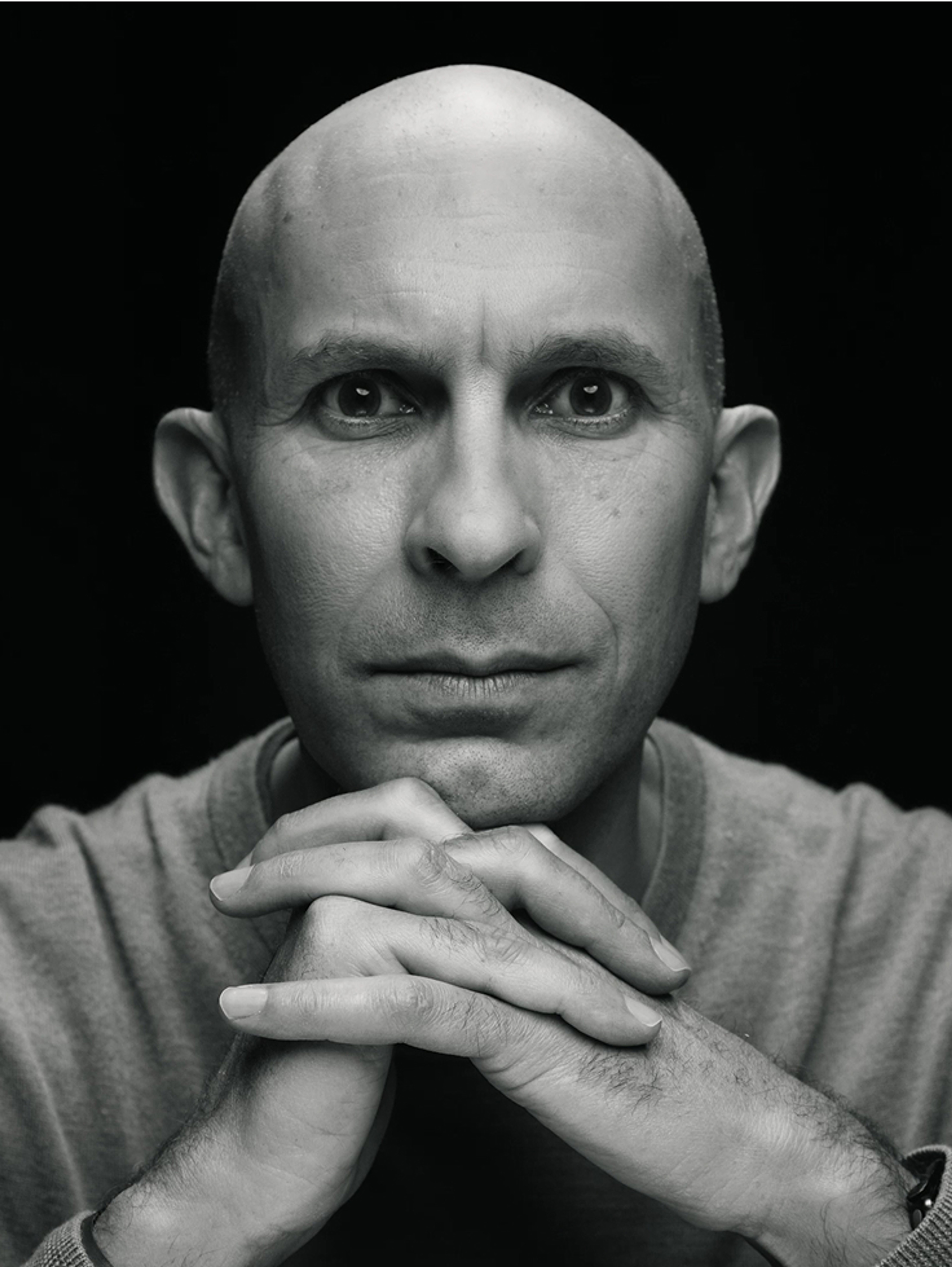
Anil Seth is Professor of Cognitive and Computational Neuroscience and Director of the Centre for Consciousness Science at the University of Sussex, and a winner of the 2025 Berggruen Prize Essay Competition.
Anil's winning essay examines one of the most consequential questions of our technological era: Could artificial intelligence ever be conscious? While the prevailing intuition suggests that consciousness might naturally follow sophisticated computation, Seth outlines a series of arguments challenging this assumption.
The jury praised Seth’s essay as a powerful, sophisticated, and beautifully written critique of the assumptions surrounding conscious AI. Jenann Ismael (William H. Miller III Professor of Philosophy at Johns Hopkins University) described it as “measured, intelligent, absorbing,” noting how it compellingly challenges the widespread belief that advances in AI will illuminate the nature of consciousness, while highlighting the author’s ability to weave familiar themes into a coherent and persuasive argument. Ned Block, Silver Professor at NYU, emphasized the essay’s originality and depth, commending its exploration of four major ideas—about computation, embodiment, the role of life, and the distinction between simulation and instantiation—and calling it “original, powerful and important.” Robert Lawrence Kuhn, creator, host, writer of Closer To Truth, underscored the essay’s piercing dismantling of our psychological biases and the hidden assumptions of computational functionalism, pointing out how it reveals the ways language and anthropomorphism seduce us into projecting consciousness onto AI. Together, the jury found the essay to be a thoughtful, pointed, and deeply insightful contribution to contemporary debates about mind and machine.
Essay Abstract
Could AI be conscious? The answer to this question is of immense moral and existential significance. The prevailing view seems to be “yes”, on the assumption that everything that biological brains do can be captured by algorithms. There are, however, reasons to think otherwise. Our psychological biases predispose us towards projecting consciousness into our machine creations. The idea that computation is sufficient for consciousness rests shakily on a reification of the metaphor that the brain is a computer (it isn’t). And there are many other possibilities, including that consciousness is property of life, not information processing. I critique the prospects for ‘conscious AI’, expose the distinct moral hazards posed by real artificial consciousness and conscious-seeming AI, and find a new relevance for an old idea – the soul.
A note from Anil Seth, “I was delighted when I learned that the topic for the 2025 Berggruen Essay Prize would be ‘consciousness’. Given my deep interest in consciousness from both scientific and philosophical perspectives, and my belief in the essay form as a powerful medium to condense thinking and reach broad audiences, I knew I had to write something. But I entered the competition with trepidation, knowing how popular the topic of consciousness would be. My essay focused on a question of deep societal importance: whether AI is, or could become, conscious. In particular, I wanted to give some reasons and resources to people who intuitively feel there’s something wrong with the idea that AI might not only think but also feel, and to stake out a case that it might be life, rather than computation, that breathes fire into the equations of experience. I also wanted to draw attention to the ethical issues surrounding AI that is, or persuasively seems to be, conscious. I was enormously surprised, and thrilled, to discover that the essay won (for the English language prize). This means a lot to me personally, but I also hope it focuses broader attention on the issues raised in the essay. Whether you agree with me or not, simply catalysing a conversation will be a major win. I’m also excited that so many people entered, and I hope that many new ideas about consciousness will have been sparked by this year’s prize.”
Readers can find Anil Seth’s full essay published in Noema.