Living Metaphysics: Process Thought, Buddhist Philosophy, and the Impact of Ontology

- Date: December 16, 2025
- Location: All Sages Bookstore
On the evening of December 16, 2025 the 41st Berggruen Seminar, titled “Living Metaphysics: Process Thought, Buddhist Philosophy, and the Impact of Ontology,” was held at the All Sages Bookstore in Haidian District, Beijing. The lecture was delivered by Dr. Tina Röck, Senior Lecturer in Philosophy at the University of Dundee, with Dr. Ruoyu ZHANG, Lecturer in the Department of Philosophy at Huazhong University of Science and Technology, serving as respondent.
The lecture revolved around two interwoven questions. The core question asked why must process philosophy engage seriously in dialogue with Buddhist thought, while the second underlying question asked what the ontological presuppositions of classical speculative metaphysics imply at a practical level, especially whether language and conceptual thinking can truly serve as sufficient tools for understanding the “nature of being.”
From “Substance” to “Process”: A Reflection on Classical Metaphysics
Röck first situated process philosophy within the longue durée of Western classical philosophy. Since antiquity, the fundamental aim of classical metaphysics has been to construct a universal and stable picture of the world to serve as an epistemological basis. When confronted with the manifold and ever-changing particulars of the concrete world, traditional metaphysicians tended to privilege seemingly immutable dimensions—such as essence, form, substance, and other abstract structures—and thus believed that beneath all flux there must lie some stable order that can be conceptualized and expressed in language.
Drawing on Alfred North Whitehead’s terminology, Röck pointed out that this approach commonly falls into what Whitehead called “the fallacy of misplaced concreteness”—the mistake of taking concepts, models, or mathematical structures derived from abstraction to be more “real” than concrete, ever-becoming reality itself. As a result, philosophers become detached from concrete lived experience, instead treating highly abstract terms such as “substance,” “being,” and “essence” as the foundation or even equivalent of reality itself.
Röck further illustrated, with examples from contemporary science, that the world is far from static. The genome and the brain were long regarded as relatively fixed structures, yet current research increasingly reveals their high degree of plasticity and dynamism. Even everyday objects that appear solid—such as tables or pens—are, in a certain sense, merely “metastable” or “relative stabilities.” They seem static only because the scale and temporal horizon of human perception are extremely limited. Once observation is compressed to the subatomic level or extended to cosmic time scales, these objects invariably reveal themselves as ongoing processes of transformation.
Röck did not advocate abandoning all concepts of “substance” outright. Rather, she emphasized that substance-based thinking should be revaluated and expanded through process philosophy. From the perspective of process ontology, the world is no longer understood as a mere aggregation of identical things, but as a network of multiple, interpenetrating, and mutually generative processes. “Stability” is no longer treated as an a priori ontological given, but as an outcome temporarily realized within processes under specific conditions.
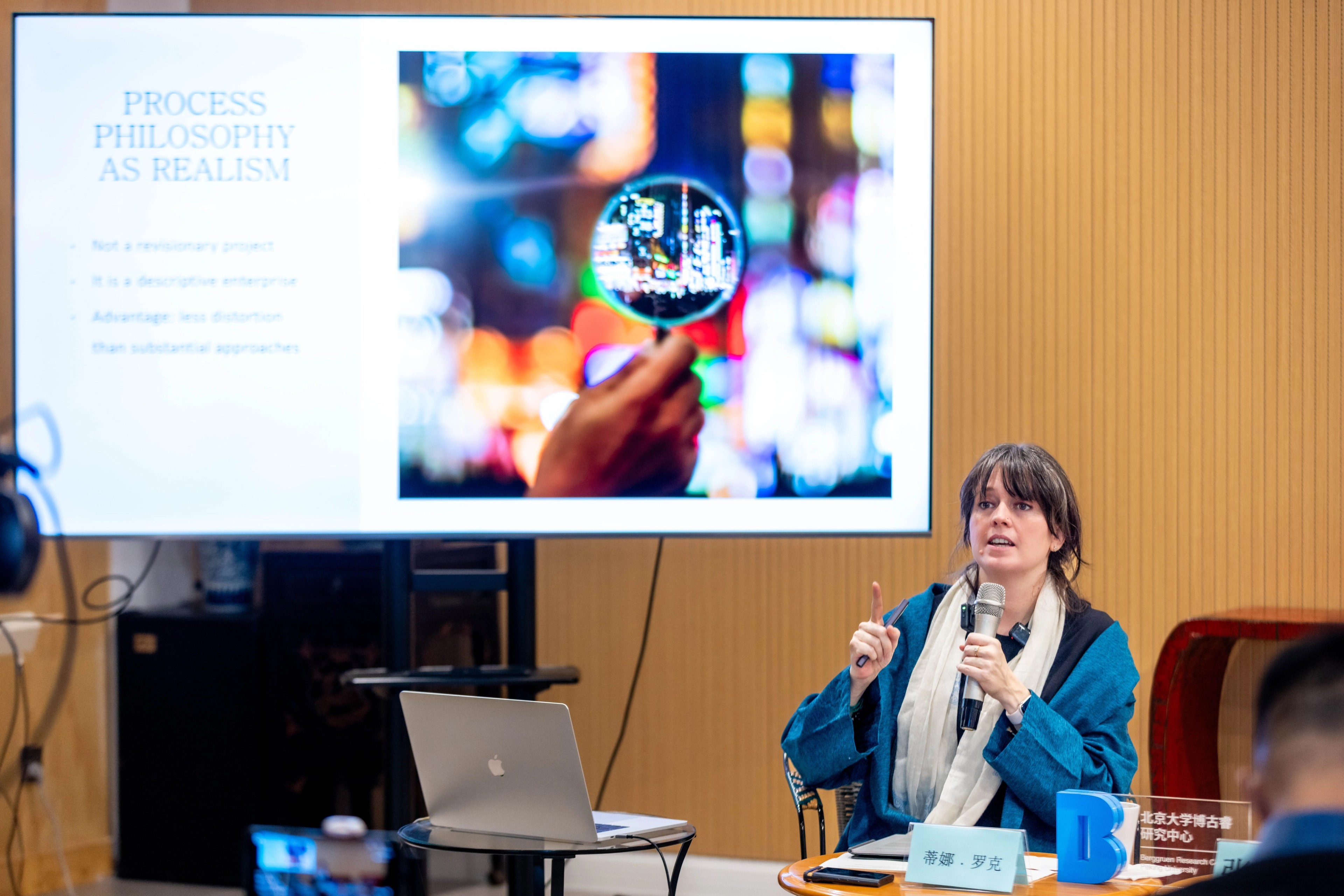
The Limits of Language, Abstraction, and Conceptual Thought
According to Röck, the deep entrenchment of substance ontology is not due solely to abstract speculation, but is closely related to the distortion of language itself. Every word possesses a reusable universality and can refer to multiple different individuals; language therefore functions through generalization and abstraction. While language is indispensable for human communication and self-orientation, its tendency toward stabilization, fixation, and typification inevitably undermines the fluidity, uniqueness, and continual generativity of reality.
Following Whitehead’s line of thought, Röck further argued that once we uncritically equate the structure of language or concepts with reality itself, we fall into another error—what Whitehead calls “the fallacy of the perfect dictionary.” This fallacy presupposes that everything real in the world has already been, or must ultimately be, incorporated into some complete conceptual–lexical system; whatever lacks an established linguistic designation is thereby deemed insignificant or even nonexistant. This problem is also clearly visible within the analytic philosophical tradition.
Röck invoked Wittgenstein’s famous metaphor from the Tractatus Logico-Philosophicus: philosophical propositions are like a ladder that one must climb up, and after attaining a transformed perspective, one must “throw away the ladder” in order to see the world rightly. This suggests that the ultimate aim of philosophical language is not an object that can be fully articulated, but rather a dimension of reality that cannot be directly stated yet nonetheless undeniably exists.
It is precisely this “unsayable” dimension that forms the shared focus of Buddhist philosophy and Whiteheadian process thought. Both recognize, in their own ways, that reality is not exhaustively captured by language, concepts, or logical structures. Philosophical work therefore involves not only reflection on linguistic expression, but also a sensitive attunement to the reality that exceeds language.
An Experiential Process Ontology: Actual Entities and Prehension
To construct a “metaphysics that can be lived,” Röck argued, one must begin from experience; she, therefore, turns toward Whitehead’s process ontology. Traditional metaphysics often downplays concrete experience, placing priority instead on abstract forms and structures. Whitehead sought to fundamentally reverse this hierarchy: experience as the ground, process as reality, and on this basis to develop an entirely new categorical framework for describing the world.
In his system, the basic units of reality are no longer static, unchanging “substances,” but what he calls “actual entities,” defined not as fixed thing, but a momentary process of becoming. Actual entities are related to one another through “prehensions”: in the course of its becoming, an actual entity feels and takes into account other entities, incorporating them into its own constitution.
Through the interweaving of such prehensive relations, multiple actual entities form nexūs, which at certain temporal and spatial scales appear as relatively stable “objects.” In other words, the “objects” of everyday experience are merely temporary configurations in which several processes momentarily coalesce at a given scale, rather than self-sufficient entities with enduring essences.
From this perspective, abstract concepts in science and philosophy are symbolic and mathematical expressions of certain patterns of motion. While a concept such as gravity possesses great instrumental value for explanation and prediction, it must not be conflated with the bodily experience of being pulled, falling, or drawn downward. When abstract concepts themselves are mistaken for experiential reality, we once again fall into the fallacy of misplaced concreteness criticized by Whitehead.
Buddhist Philosophy: Fiction, Emptiness, and Dependent Origination
In response to the inherent limits of abstraction and language, Röck argued that the Buddhist tradition offers a profound path of reflection and correction. From its inception, Buddhism directly confronted three fundamental characteristics of the world: impermanence (anicca), non-self (anattā), and dukkha, often translated as “suffering.” The world is in constant flux and lacks any enduring self-nature; within such a structure, human life is inevitably marked by instability and groundlessness.
We, however, cannot find satisfaction with this changing world because, if everything is changeable and perishable, our life is quite unstable, uncertain, and restless, with nothing solid upon which to rely.
— Masao Abe
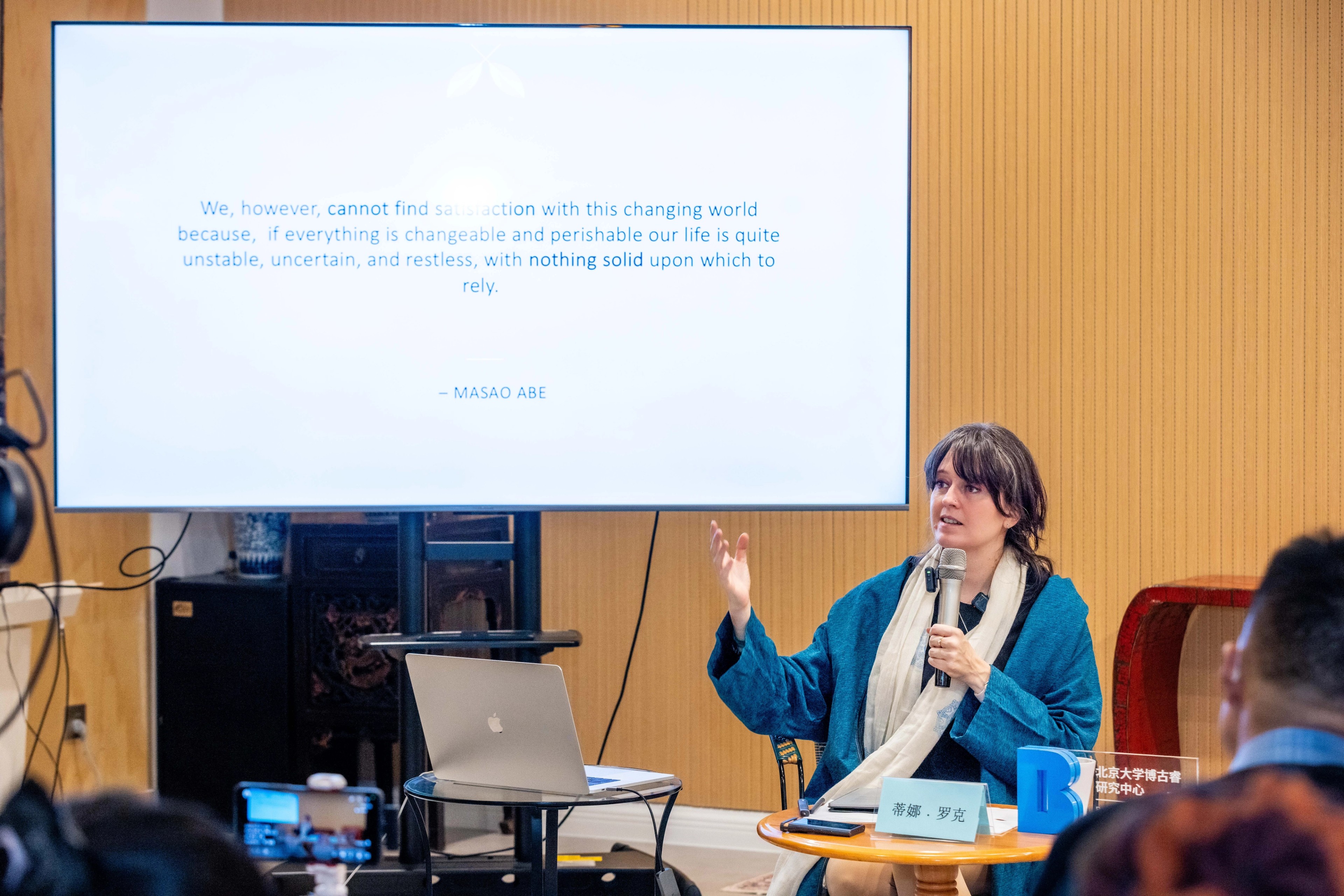
As the Zen philosopher Masao Abe observed, if everything is subject to change and eventual disappearance, human life inevitably becomes profoundly unstable, uncertain, and difficult to settle. In order to alleviate this deep existential anxiety, humans tend to construct a seemingly stable world.
From this perspective, substance-based metaphysics is not merely an abstract theoretical picture, but also a psychological product of human preferences, fears, and interests—a defensive mechanism for avoiding a direct confrontation with impermanence, death, and loss.
Röck paid particular attention to the Madhyamaka (Middle Way) school of Mahāyāna Buddhism, founded by Nāgārjuna. Madhyamaka philosophers maintain that all phenomena and concepts are empty (śūnyatā), lacking independent, self-subsistent existence or enduring essence. All properties are fundamentally relational and contextual. Notions such as “large” and “small” arise only through comparison, for example. This view is systematically articulated through the doctrine of dependent origination (pratītyasamutpāda), according to which all things arise dependent upon conditions, mutually reliant and interdependent. Nothing exists independently by virtue of its own nature; rather, phenomena appear temporarily through their relations with others and are continuously redefined in the ongoing movement of arising and ceasing.
Convergences and Divergences between Process Philosophy and Buddhism
Röck noted several structural affinities between process philosophy and Buddhist thought. First, both reject the reification of abstract concepts and refuse to treat mathematical structures or linguistic expressions as more fundamental than concrete experience. Second, both regard impermanence and interdependence as basic features of the world; existence is understood not as self-sufficient substance, but as an ongoing, relational process. Third, both maintain a reflective stance toward the powers and limits of language and conceptual thought, acknowledging that certain dimensions of reality cannot be fully exhausted by existing propositional or conceptual systems, dissolving the boundary between the sayable and the unsayable.
At the same time, Röck emphasized crucial differences. Whitehead’s process ontology is first and foremost a theoretical ontological construction, whose primary task is to redescribe the structure and constitution of reality at the level of concepts and categories. Buddhism, by contrast, has from the outset been a practical–ethical tradition. Its insights into impermanence and dependent origination are not confined to epistemology or ontology, but are directed toward transforming modes of living, existential attitudes, and ethical orientations, with the ultimate goal to aid humans to transcend suffering and delusion.
In this sense, a truly “living metaphysics” must not only redraw the ontological map at the theoretical level, but also address a more fundamental practical question: once we acknowledge the world as processual and interdependently arisen, how will this understanding concretely shape our actions, ethical choices, and ways of responding to major scientific and social issues?
Commentary and Discussion: What Is “Process”?
In the subsequent commentary and discussion, Dr. Zhang raised further questions concerning the core concept of “process.” If the basic units of reality are no longer substances but processes, how are different processes distinguished and individuated? Does “process” compete with traditional candidates such as “facts” or “events” for ontological priority? And does process ontology necessarily require the elimination of objects, or can objects still be retained in some transformed sense?
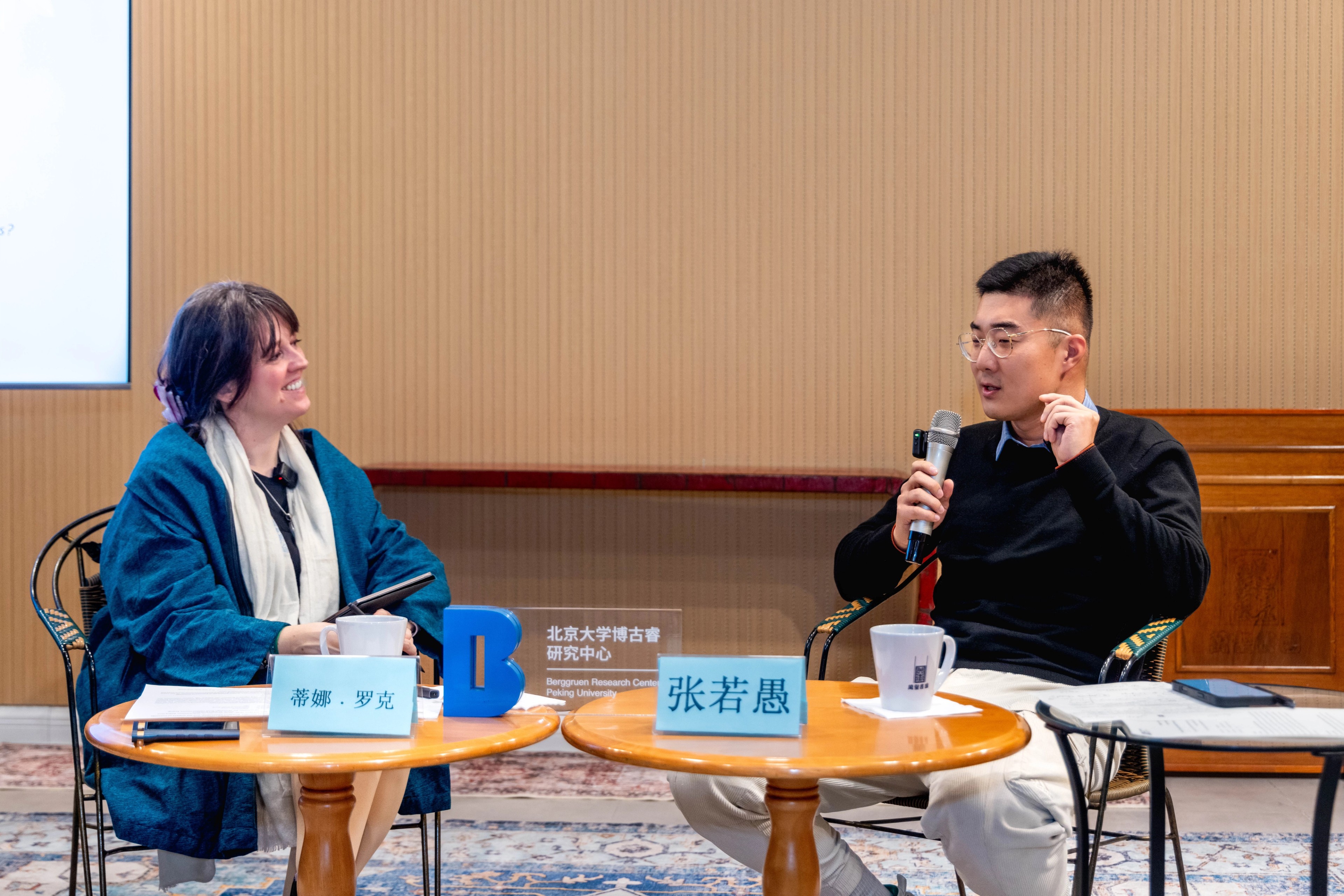
In response, Röck deliberately avoided offering a rigid, reified definition. Instead, she adopted a “gestural” or indicative explanation, turning to bodily experience: the beating of the heart, the contraction and relaxation of muscles, the continuous exchange of matter and energy between cells and their environment. How should we determine whether the “self” is a single process or a collection of countless processes? Is the air one inhales part of the self? When it is exhaled, does it immediately fall outside the boundary of the self?
These questions suggest that, from a processual perspective, the seemingly clear boundary between “self” and “environment,” “object” and “surroundings,” becomes deeply ambiguous and fluid. During the ensuing discussion, one participant noted that even the act of giving a definition carries an essentialist impulse. This reminder echoed Röck’s broader claim: to genuinely practice a process-centered “living metaphysics,” we must not only create new concepts and language, but also remain vigilant toward definition and classification themselves, which may inadvertently solidify what ought to remain fluid, turning relations and generative processes into static “things.”
In closing, Röck invited the audience to reflect further on the implications of reshaping our ontological perspective through dialogue between process philosophy and Buddhist thought. Not only will this profoundly transform philosophical methodology, but it also inevitably influences practices in our personal lives and reshapes how we approach complex scientific and social issues.
Written by Lochlan Zhang and Chianna Cohen

Speaker
Tina Röck
Senior Lecturer in Philosophy, University of Dundee
Tina Röck's research addresses the question of what it means for something to be in a world of constant change. She developed such a dynamic, process-oriented account of reality in her last book Dynamic Realism. Drawing on ancient Greek philosophy, phenomenology and process philosophy she explores whether the world is best understood through organic, interconnected processes rather than through static building blocks. Tina is increasingly integrating Buddhist philosophy (particularly ideas of impermanence, dependent arising, and emptiness) into her work, seeking ways to bring Vajrayana Buddhism into dialogue with process metaphysics and phenomenology.
Commentator
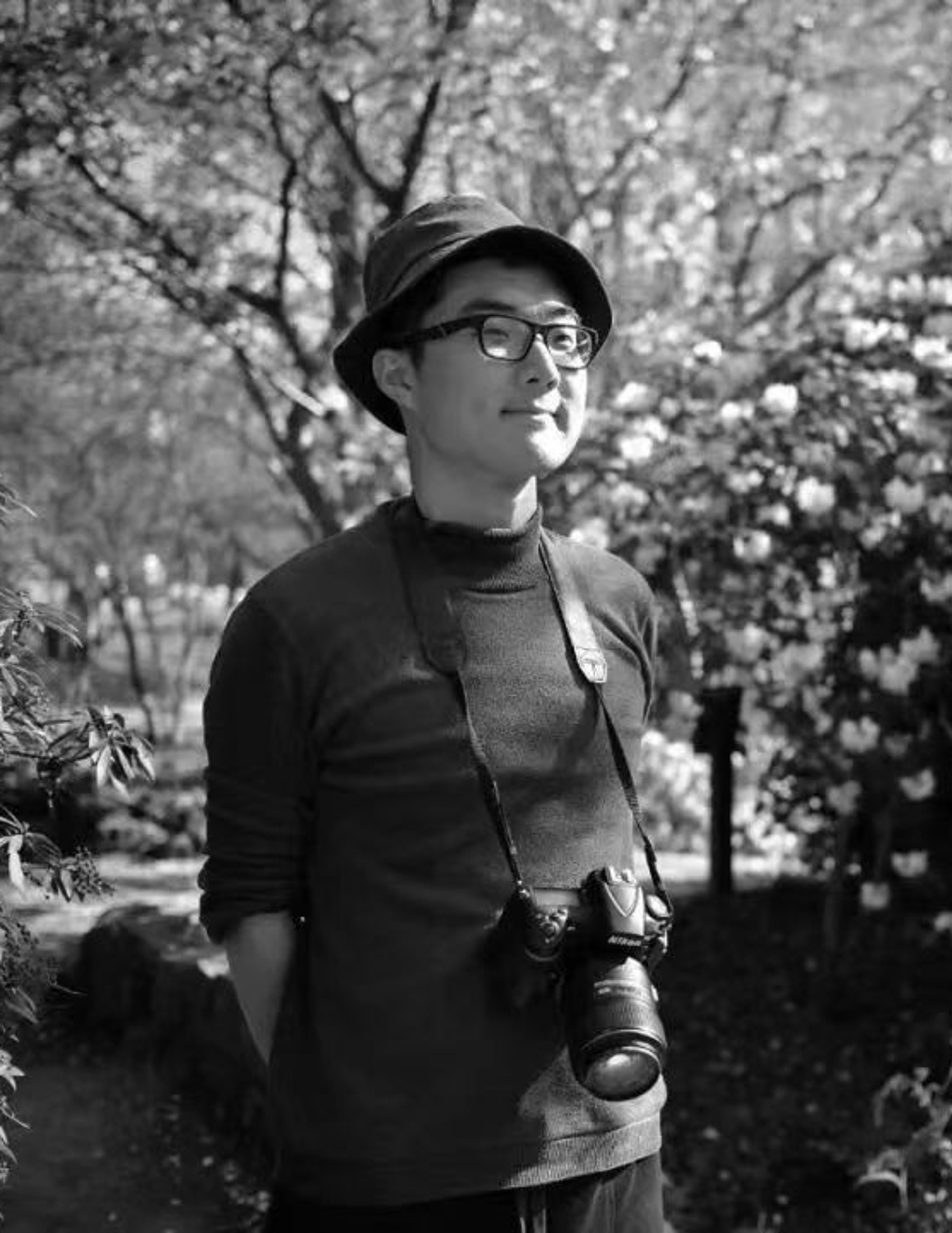
Ruoyu ZHANG
Lecturer, School of Philosophy, Huazhong University of Science and Technology
He has studied in Oxford, Aberdeen and got his PhD from Durham University. He has mainly published in metaphysics and anthropology. He has authored and translated several books and hosted the National Social Science Funds of China.
About The Berggruen Institute
About The Berggruen Institute
About The Berggruen Institute
About The Berggruen Institute
About The Berggruen Institute
About The Berggruen Institute
About The Berggruen Institute
About The Berggruen Institute
About The Berggruen Institute
About The Berggruen Institute
Related
The Self in the West and East Asia: Being or Becoming

Neither Human nor Machine: On the In-Betweenness of AI
The Intuition Trap: Exploring How Evolutionary Psychology Explains Contemporary Misconceptions
When Sci-Fi Meets Brain Science: Baoshu Discusses New Book with Ge Jianqiao

A Reflection on Speciesism
2025–2026 Berggruen Institute China Fellows Announced

Aristotle on Emotions and Emotion Proof
Ten Thousand Things: Cross-morphing and Transmattering

Human Nature and Planetary Metaphysics

Verb Thinking and Neo-Enlightenment

The Elusive Body: From Daoism to Digital Selves
Shame and Happiness: A Philosophical Dialogue Across Ancient Greece and Early China
Dual Perspectives on Bioethics: Western Principalism and the Confucian Rituals Tradition

The Illusion of the Causality of Life
Digital Personality: Humans and AI

Confucian Ren and Care

Planetary Pluralism: A Humanistic Dialogue on Migration to Mars
Fundamental Concepts in Philosophy: BODY
From Tree of Life to Web of Life — The Origin of Life Complexity
Boundaries and Resonance of the Body