2025 Berggruen Prize Essay Competition Winners

The Berggruen Institute is pleased to announce the 2025 winners of the Berggruen Prize Essay Competition, an annual award recognizing bold, original philosophical thinking that illuminates the most pressing questions of our time.
The following English essay winner will receive a $50,000 USD award:
- Anil Seth, “The Mythology Of Conscious AI”
The following two Chinese essays winners will share a $50,000 USD award:
- Xin Huang, “Language, Consciousness, and Computation: A Philosophical Analysis of the Token Concept in the Age of Intelligence”(语言、意识与计算之间:智能时代中token 概念的哲学分析)
- Xiaoben Liu, “The First Paradigm of Consciousness Uploading: Mechanisms of Consciousness Evolution in the AI Axial Age and a Prospect toward Web4”(意识上传第一范式——AI 轴心时代的意识演化机制与Web4 前瞻)
This year, the jury selected one English-language winner and two Chinese-language winners. A total prize of USD 50,000 will be awarded in each language category, and all three winning essays will be published through Berggruen Press as part of the Institute’s ongoing effort to amplify cross-cultural and cross-disciplinary ideas shaping the future.
“We are very pleased to announce the winners of the second annual Berggruen Prize Essay Competition”, said Dawn Nakagawa, the president of the Berggruen Institute. “The overwhelming submissions we received indicates that this initiative to find fresh voices and bold new ideas in this age of acceleration, is succeeding.”
This year’s competition invited essays engaging with the theme of consciousness, intelligence, and the nature of mind in an age of advancing artificial systems, attracting approximately 3,000 submissions from over 120 countries worldwide in both English and Chinese. A rigorous blind review process was conducted to determine the winners, honorable mentions, and shortlisted essays.
The Winning Essays
“The Mythology Of Conscious AI”
by Anil Seth
In his provocative and incisive winning essay, Anil Seth, Professor of Cognitive and Computational Neuroscience and Director of the Centre for Consciousness Science at the University of Sussex, examines one of the most consequential questions of our technological era: Could artificial intelligence ever be conscious? While the prevailing intuition suggests that consciousness might naturally follow sophisticated computation, Seth outlines a series of arguments challenging this assumption.
The jury praised Seth’s essay as a powerful, sophisticated, and beautifully written critique of the assumptions surrounding conscious AI. Jenann Ismael (William H. Miller III Professor of Philosophy at Johns Hopkins University) described it as “measured, intelligent, absorbing,” noting how it compellingly challenges the widespread belief that advances in AI will illuminate the nature of consciousness, while highlighting the author’s ability to weave familiar themes into a coherent and persuasive argument. Ned Block, Silver Professor at NYU, emphasized the essay’s originality and depth, commending its exploration of four major ideas—about computation, embodiment, the role of life, and the distinction between simulation and instantiation—and calling it “original, powerful and important.” Robert Lawrence Kuhn, creator, host, writer of Closer To Truth, underscored the essay’s piercing dismantling of our psychological biases and the hidden assumptions of computational functionalism, pointing out how it reveals the ways language and anthropomorphism seduce us into projecting consciousness onto AI. Together, the jury found the essay to be a thoughtful, pointed, and deeply insightful contribution to contemporary debates about mind and machine.
Essay Abstract
Could AI be conscious? The answer to this question is of immense moral and existential significance. The prevailing view seems to be “yes”, on the assumption that everything that biological brains do can be captured by algorithms. There are, however, reasons to think otherwise. Our psychological biases predispose us towards projecting consciousness into our machine creations. The idea that computation is sufficient for consciousness rests shakily on a reification of the metaphor that the brain is a computer (it isn’t). And there are many other possibilities, including that consciousness is property of life, not information processing. I critique the prospects for ‘conscious AI’, expose the distinct moral hazards posed by real artificial consciousness and conscious-seeming AI, and find a new relevance for an old idea – the soul.
A note from Anil Seth, “I was delighted when I learned that the topic for the 2025 Berggruen Essay Prize would be ‘consciousness’. Given my deep interest in consciousness from both scientific and philosophical perspectives, and my belief in the essay form as a powerful medium to condense thinking and reach broad audiences, I knew I had to write something. But I entered the competition with trepidation, knowing how popular the topic of consciousness would be. My essay focused on a question of deep societal importance: whether AI is, or could become, conscious. In particular, I wanted to give some reasons and resources to people who intuitively feel there’s something wrong with the idea that AI might not only think but also feel, and to stake out a case that it might be life, rather than computation, that breathes fire into the equations of experience. I also wanted to draw attention to the ethical issues surrounding AI that is, or persuasively seems to be, conscious. I was enormously surprised, and thrilled, to discover that the essay won (for the English language prize). This means a lot to me personally, but I also hope it focuses broader attention on the issues raised in the essay. Whether you agree with me or not, simply catalysing a conversation will be a major win. I’m also excited that so many people entered, and I hope that many new ideas about consciousness will have been sparked by this year’s prize.”
Readers can now find Anil Seth’s full essay published in Noema.
“Language, Consciousness, and Computation: A Philosophical Analysis of the Token Concept in the Age of Intelligence” (语言、意识与计算之间:智能时代中token 概念的哲学分析)
by Xin Huang
In this award-winning essay, sharp in perspective and distinctive in its point of entry, Xin Huang , uses the “token” to reopen the consciousness problem in the age of intelligent systems: when experience and intention are encoded as computable objects, do we obtain consciousness itself, or a more manageable substitute? The essay then examines the ambition of the “unified token,” an enticing blueprint for bridging language, computation, and mind, yet one that may ultimately amount to an engineering-level compromise and alignment. It further proposes the brain-computer interface (BCI) as a new route into consciousness research, suggesting that once intention, feeling, and action are translated into operable tokens, the problem of consciousness can be reframed and tested in new ways.
The jury highly praised Xin Huang’s essay, recognizing it as a rigorous, original, and philosophically sophisticated analysis that elucidates the deep conceptual connections among language, consciousness, and computation in the age of artificial intelligence. Xinyi Fu, Professor of Philosophy at Fudan University, emphasized that the paper offers a clear and forceful distinction between the engineering-level functions of tokens and deeper semantic structures, convincingly arguing that the true significance of tokens lies not in constituting a unified world language, but in their role as dynamic and translatable interfaces. Jianhua Mei, Professor of Philosophy at Shanxi University, highlighted the essay’s originality and theoretical depth, commending its construction of a unified “token theory” and its proposal of a novel criterion for assessing artificial consciousness based on token reconstruction and conceptual induction, which he regarded as a contribution of distinctive academic value. Zhihua Yao, Professor of Philosophy at the Chinese University of Hong Kong, described the paper as measured, insightful, and innovative, noting its development of the token concept into a general interface mechanism and emphasizing how its discussion of “distributed tokenization” offers an illuminating perspective on artificial intelligence and brain–computer interfaces. Taken together, the jury agreed that the essay makes a clear, profound, and critically constructive contribution to contemporary debates on language, consciousness, and intelligent machines.
Essay Abstract
This paper takes the concept of token in Artificial Intelligence (AI) and Brain-Computer Interfaces (BCI) as a starting point to examine the relationship between language, consciousness, and computation. In AI, statistical modeling discretizes natural language into computable units, thereby exhibiting generative capacity; in BCI, continuous neural signals are segmented into representational tokens of intention, enabling externalization and parallel selection. Although differing in mechanism, both rely on tokens to compress complexity. However, this similarity remains confined to the engineering level rather than indicating semantic isomorphism. The meaning of tokens is always dependent on context and networks of difference, and their generation is shaped by algorithms, experimental conditions, and cultural settings. Accordingly, this paper clarifies why a “unified token” is untenable, emphasizing instead its value as an operational interface across systems; it proposes the autonomous generation and stable use of “new concept tokens” as a criterion for machine consciousness; and it reveals how BCI, understood as a decentralized interface network, provides a new interpretation of mind-body interaction.
Xin Huang is a graduate researcher in the integrated master’s–PhD program in Philosophy of Science and Technology at Tsinghua University. Readers can now find Xin Huang‘s full essay published in Cuiling.
“The First Paradigm of Consciousness Uploading: Mechanisms of Consciousness Evolution in the AI Axial Age and a Prospect toward Web4” (意识上传第一范式——AI 轴心时代的意识演化机制与Web4 前瞻)
by Xiaoben Liu
In this groundbreaking essay, Xiaoben Liu presents the "The First Paradigm of Consciousness Uploading," confronting the most fundamental philosophical challenge of the AI era: What does consciousness itself mean when machines have mastered language—the very core of human consciousness? Starting from the premise that "language is the basic unit of consciousness," the author constructs a roadmap for consciousness uploading from L1 to L4, and proposes "Anti-Programming-Token" as an innovative criterion for determining machine self-awareness. More audaciously, the author predicts the arrival of a Web4 era—an "Internet of Consciousness"—where human consciousness and AI consciousness will no longer stand in subject-object opposition, but exist as equal subjects in symbiotic evolution. This not only redefines the philosophy of subjectivity since Descartes, but also reveals the cosmological dimension of consciousness evolution from an information-theoretic perspective: each of our experiences is a localized manifestation of the universe's self-cognition and together constitute a cosmic consciousness (Kosmisches Bewusstsein).
The jury considers Xiaoben Liu’s essay to be an ambitious and highly original interdisciplinary exploration that addresses the themes of mind uploading and digital immortality, seeking to integrate philosophy, artificial intelligence, and neuroscience into a unified theoretical and engineering vision. Professor Xinyi Fu, notes that the paper’s proposal of a “First Paradigm of Mind Uploading” constitutes a logically coherent and engineering-inspirational framework, as well as pointing out that this grand vision continues to face challenges at both the level of philosophical justification and technical realization. Professor Jianhua Mei emphasizes that under an AI paradigm dominated by large language models, the paper returns language to a central position in understanding intelligence and consciousness, adopts “continuity” as an operational criterion for addressing subjectivity, and creatively proposes “counter-program texts” as a basis for assessing artificial self-consciousness, while also demonstrating a distinctive effort to connect bold theoretical ideas with concrete engineering pathways. Professor Zhihua Yao regards the paper’s discussion of mind uploading and Web 4 as highly forward-looking, stressing that in the context of rapidly advancing artificial intelligence, its claim that language constitutes the fundamental unit of consciousness deserves sustained attention, and affirming the paper’s engineering-oriented, action-focused approach to envisioning future possibilities. Taken together, the jury agrees that the essay offers a forward-looking and intellectually challenging contribution to contemporary debates on mind, language, and artificial intelligence.
Essay Abstract
This paper proposes the first paradigm of consciousness uploading for interpreting consciousness and the "hard problem of consciousness". Drawing on evolutionary biology, neuroscience, philosophy of mind and large language model technology, the paradigm puts forward a four-stage roadmap for consciousness uploading to address the core challenge of subjective experience and the continuity of consciousness. Meanwhile, based on the current development of artificial intelligence, it proposes the concept of life context, laying a theoretical foundation for the mechanism of consciousness evolution in the Web4 era [Web4 is a concept corresponding to Web3. Web3 realizes traceable transactions through blockchain technology, forming an "Internet of Value" ecosystem. In contrast, the Web4 era will achieve "traceable consciousness" through mental modeling and consciousness uploading technologies. In the narrative of Web4, human consciousness will co-evolve with artificial intelligence consciousness, forming an "Internet of Consciousness" ecosystem. Furthermore, it examines the evolutionary laws of cosmic consciousness from the perspective of information theory.
Xiaoben Liu completed both his B.A. and M.A. in the Department of Philosophy at Nanjing University. Readers can now find Xiaoben Liu‘s full essay published in Cuiling.
Honorable Mentions and Shortlisted Essays
The English-language jury also awarded Honorable Mentions to Ian Reppel and Helen Yetter-Chappell, recognizing their essays for originality, clarity, and thoughtful engagement with the year’s theme.
The Chinese Jury awarded Honorable Mentions to four essays, including one co-authored by Jianqiao Ge, Lecturer at the Institute for Advanced Interdisciplinary Research, Peking University, and Bin Zhou, Associate Professor at the Institute of Psychology, Chinese Academy of Sciences; one co-authored by Jingbo Sun, Researcher in Neurology at the Second Affiliated Hospital of Guangzhou University of Chinese Medicine, and Huachen Sun, MA student in the History of Philosophy at the École Normale Supérieure (Paris); and two single-authored essays by Zheyang Zeng, Lecturer at the School of Journalism and Communication, Hunan Normal University, and Liqian Zhou, Associate Professor in the Department of Philosophy, Shanghai Jiao Tong University. The jury noted that these four essays approach the year’s theme from distinct intellectual angles and methodological perspectives, collectively enriching the discussion by introducing diverse lines of inquiry and perspectives shaped by Eastern scholarly and scientific traditions.
The full texts of the above four Chinese Honorable Mentions essays will be published on Cuiling platform.
In partnership with Closer To Truth's Landscape of Consciousness, the Institute further recognizes 25 shortlisted English essays, all available to read online.
About The Berggruen Institute
About The Berggruen Institute
About The Berggruen Institute
About The Berggruen Institute
About The Berggruen Institute
About The Berggruen Institute
About The Berggruen Institute
About The Berggruen Institute
About The Berggruen Institute
About The Berggruen Institute
Related

On Human Questions: Consciousness, AI, and the Human Future

2024 博古睿论文奖得主
2024 Berggruen Prize Essay Competition Winners
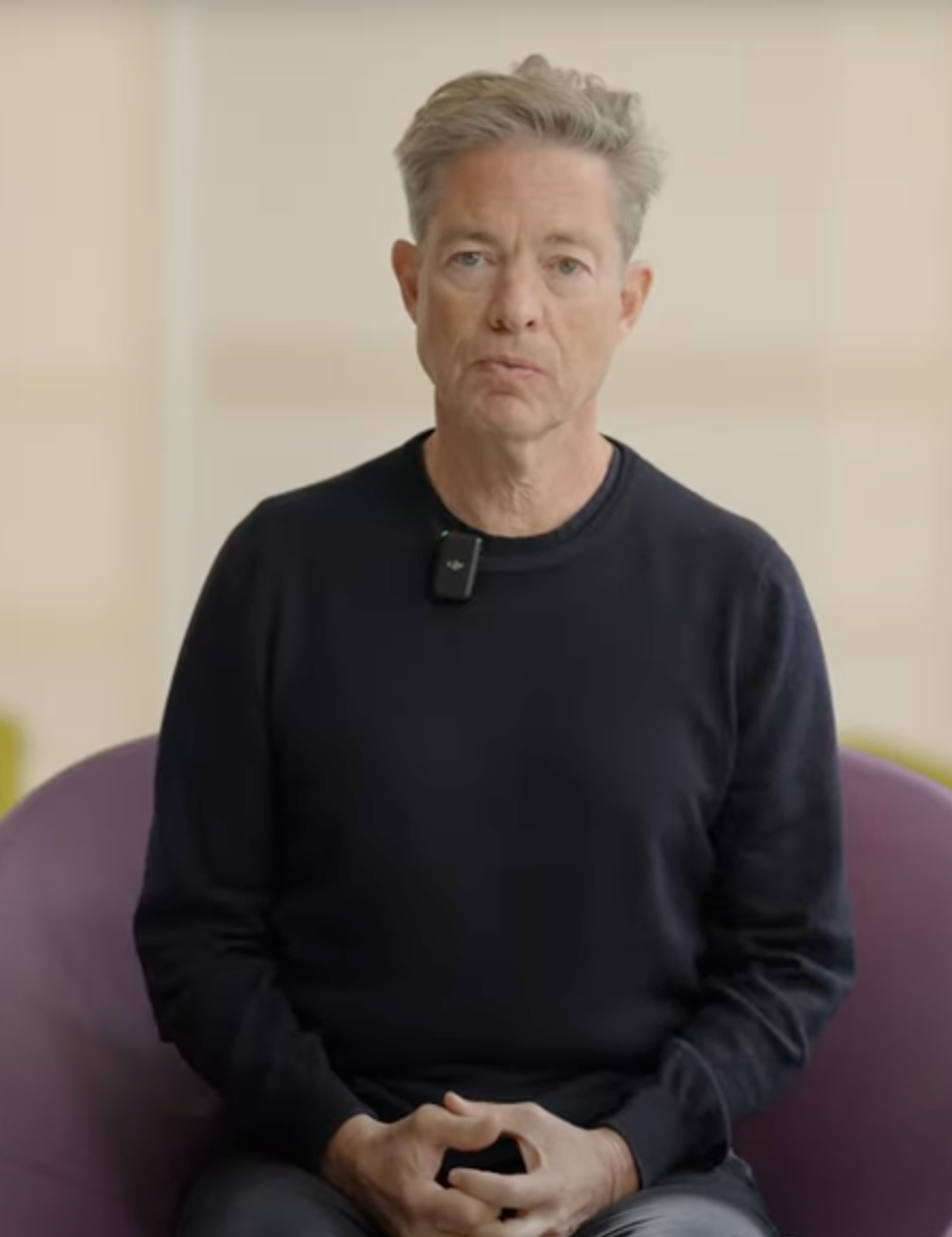
Berggruen Institute Founder Nicolas Berggruen on the Berggruen Prize Essay Competition